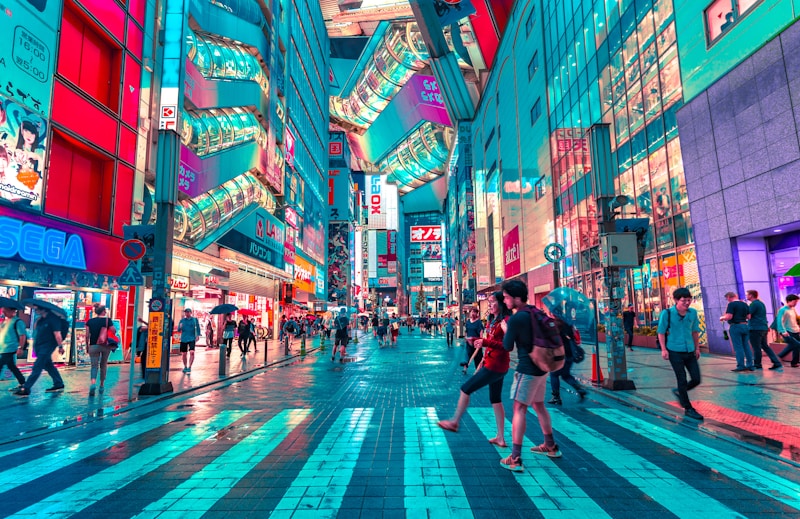
Harajuku: Where Fashion Has No Rules
In a country famous for conformity, Harajuku has always been the exception. Every Sunday for decades, young Japanese gathered near Yoyogi Park in Harajuku to show off the most creative, extreme, and imaginative outfits the world had ever seen — Gothic Lolitas, Visual Kei musicians, Decora girls covered in plastic accessories, and Fruits-style freestyle fashion that blended vintage, streetwear, and sheer invention.
Today, the street fashion scene has evolved — the famous Sunday bridge gatherings have faded, but Harajuku remains the epicenter of Japan’s creative fashion universe. The Takeshita Street (竹下通り), the main shopping lane, still buzzes with energy, and the surrounding streets hide boutiques that are genuinely world-class.
The Key Harajuku Styles Explained
Kawaii (可愛い) — “Cute Culture”
Kawaii is not a fashion style per se — it’s a cultural phenomenon. The word literally means “cute,” but in Japan it extends to an entire aesthetic of softness, pastel colors, round shapes, and childlike sweetness. Everything from Sanrio’s Hello Kitty to adult fashion collections can be “kawaii.”
In fashion terms, kawaii manifests as:
- Pastel colors (especially pink, lavender, mint)
- Oversized silhouettes
- Accessories featuring animals, food, or cartoon characters
- Puffed sleeves, ruffles, and bows
Key brand: Swimmer, Galaxxxy, Milk, and the legendary 6%DOKIDOKI.
Lolita Fashion (ロリータ・ファッション)
Lolita is perhaps the most internationally recognized Japanese fashion subculture. It deliberately evokes the aesthetics of Victorian-era European children’s fashion — full petticoats, lace, bonnets, and elaborate accessories — but reinterpreted in a completely non-sexual, artistic way.
Main Lolita sub-styles:
| Sub-style | Characteristics |
|---|---|
| Sweet Lolita | Pastel colors, dessert motifs, maximum frills |
| Gothic Lolita | Black/white, dark Victorian, crosses and bats |
| Classic Lolita | Muted earth tones, more restrained, elegant |
| Country Lolita | Gingham, florals, pastoral Japanese village aesthetic |
Key brands: Baby the Stars Shine Bright, Angelic Pretty, Metamorphose temps de fille.
Streetwear (ストリートウェア)
Japan’s contribution to global streetwear is immense. The neighborhood of Ura-Harajuku (back streets of Harajuku, sometimes called “Urahara”) spawned brands like BAPE (A Bathing Ape), Neighborhood, WTAPS, and Goodenough in the 1990s — all of which transformed street fashion worldwide.
Japanese streetwear is characterized by:
- Extreme attention to detail and construction quality
- Limited releases and “drop” culture (before it was mainstream globally)
- Collaborations with art, music, and skateboarding
- Subtle branding vs. the Western logo-heavy approach
Key spots: BAPE Harajuku flagship, Supreme Harajuku, Comme des Garçons PLAY on Omotesando.
Visual Kei (ヴィジュアル系)
Born from Japanese rock and metal music culture, Visual Kei is an aesthetic characterized by elaborate makeup, dramatic hair, and theatrical costumes drawing from gothic, glam rock, and anime aesthetics. Think: David Bowie meets anime villain meets Versailles.
While it’s primarily a music subculture, its fashion influence extends throughout Japanese street style.
Where to find it: The area around Shinjuku’s live music venues, and shops on Takeshita Street.
Where to Shop in Harajuku
Takeshita Street (竹下通り)
The main artery, famous for:
- Crepe shops (Marion Crepes — don’t miss it)
- Cheaper fashion for teens and tourists
- Quirky accessories, fake eyelashes, and novelty items
- Limited-edition character merchandise
Best visited on weekday afternoons for a calmer experience.
Omotesando (表参道)
Called Japan’s “Champs-Élysées” — the upscale cousin to Takeshita Street. Here you’ll find:
- Comme des Garçons, Issey Miyake, Yohji Yamamoto
- Apple Store’s most beautiful location
- Concept stores like Journal Standard and BEAMS
- The Omotesando Hills mall with architecture by Tadao Ando
Cat Street (キャットストリート)
A quiet, tree-lined backstreet running parallel to Omotesando. This is where serious fashion hunters go:
- Independent boutiques and vintage shops
- Lesser-known Japanese designer labels
- Excellent coffee shops and cafés
- Concept stores and gallery-shops
Vintage Shopping (ヴィンテージ)
Japan is possibly the world’s best country for vintage clothing. Koenji (15 min from Shinjuku) has Tokyo’s densest concentration of vintage shops. In Harajuku, try Chicago and Kinji for American vintage at exceptional quality.
Japanese Fashion Brands Worth Knowing Globally
| Brand | Founded | Known For |
|---|---|---|
| Uniqlo | 1984 | Affordable basics, LifeWear philosophy |
| Issey Miyake | 1970 | Pleats Please, innovative fabrication |
| Comme des Garçons | 1969 | Avant-garde, Rei Kawakubo’s vision |
| BAPE | 1993 | Streetwear, camo prints, celebrity collabs |
| Sacai | 1999 | Hybrid construction, layering, luxury |
| Yohji Yamamoto | 1972 | Black, deconstruction, poetry |
Affiliate Picks: Harajuku & Japanese Fashion
- 👟 BAPE Sneakers on StockX — Authentic resale market. View on StockX (affiliate link)
- 🛍️ Uniqlo UT Graphic Tees — Japan exclusive designs available internationally. View online (affiliate link)
- 📖 “Japanese Street Fashion” Coffee Table Book — A stunning visual archive of 20 years of Harajuku. View on Amazon (affiliate link)
- 🇯🇵 Japan Shopping Tour on Klook — Guided fashion tours of Harajuku & Shibuya. View on Klook (affiliate link)
Final Thoughts
Harajuku matters because it showed the world that fashion doesn’t have to follow anyone’s rules. In a country that values conformity, this one neighborhood produced an explosion of individuality that influenced designers, photographers, and fashion editors worldwide.
The scene has changed — social media has replaced the Sunday bridge gatherings, and many legendary shops have closed. But walk the backstreets on any afternoon, and you’ll still see young Japanese people dressed in ways that make you stop mid-stride and stare.
The creativity hasn’t gone anywhere. It’s just on Instagram now.