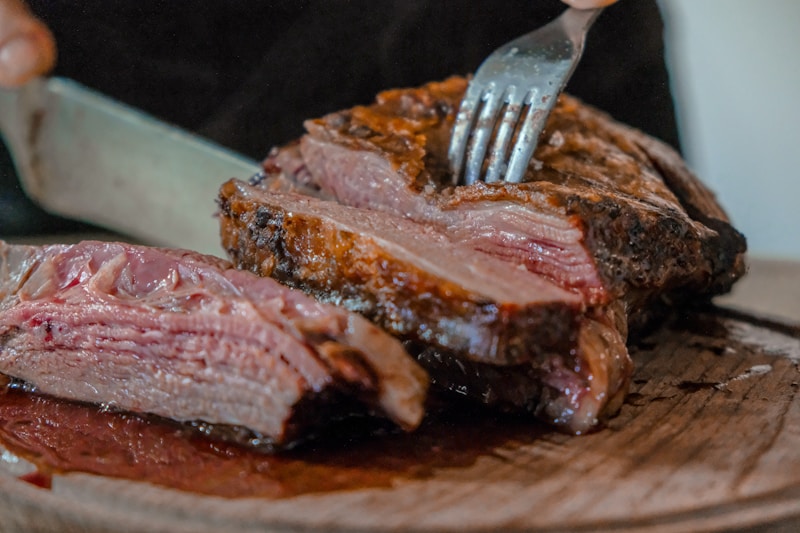
What is Wagyu?
Wagyu (和牛) literally means “Japanese cow.” But the word has come to represent something much more specific: a category of beef that is genetically predisposed to produce extraordinary intramuscular fat marbling — the fine web of creamy white fat interwoven through deep red muscle that creates the world’s most luxurious eating experience.
Wagyu beef melts at a lower temperature than standard beef fat, meaning it partially dissolves on your tongue before you even fully bite down. The texture is buttery, the flavor is rich and slightly sweet, and a single slice of A5-grade wagyu can genuinely be a transcendent experience.
This is not marketing. It’s biology.
The Science Behind the Marbling
What makes Japanese wagyu so special comes down to genetics and raising methods.
Genetics
Four Japanese cattle breeds are officially classified as wagyu:
- Kuroge Washu (Black) — produces the most famous wagyu; 90% of wagyu worldwide
- Akage Washu (Brown/Red) — Kumamoto and Kochi prefectures
- Nihon Tankaku Washu (Shorthorn) — Iwate, Aomori regions
- Mukaku Washu (Polled) — Okayama, Hiroshima
The Kuroge Washu carries a genetic variant in the FABP4 gene that significantly increases intramuscular fat deposition. You cannot produce the same result with a different breed, regardless of how you raise them.
Raising Methods
Premium wagyu are raised in small herds (often individual stalls), fed a carefully controlled diet of rice straw, grass, and grain for 26–32 months — roughly three times longer than American beef cattle. Stress reduction is prioritized: calmer cattle produce better-marbled beef.
The famous claims about massages and beer are largely myth or marketing. The real factors are genetics, feed, and time.
Understanding the Grading System
Japanese beef is graded by the Japan Meat Grading Association (JMGA) on two scales:
Yield Grade (A, B, C)
How efficiently the carcass yields usable meat. A is highest.
Quality Grade (1–5)
Based on four factors:
- Marbling (BMS) — Beef Marbling Score 1-12
- Meat color — 1-7 scale
- Meat firmness and texture — 1-5
- Fat color and quality — 1-7
The final grade is the lowest of the four quality scores.
What A5 Means
A5 = Grade A yield + Grade 5 quality. It is the absolute highest possible certification. An A5 BMS 12 wagyu has the most extreme marbling achievable.
| Grade | Marbling Score | Eating Experience |
|---|---|---|
| A5 | BMS 8–12 | Extraordinary — buttery, melting, intense |
| A4 | BMS 5–7 | Excellent — noticeably superior to standard beef |
| A3 | BMS 3–4 | Very good — still exceptional by global standards |
| A1–A2 | BMS 1–2 | Good Japanese beef, but not the premium experience |
Kobe Beef vs. Other Wagyu: What’s the Difference?
Kobe beef is the most famous wagyu brand worldwide — but it’s specifically a brand within wagyu, not a type of beef.
Kobe beef must:
- Come from Tajima-gyu cattle (a Kuroge Washu strain from Hyogo Prefecture)
- Be born, raised, and processed in Hyogo Prefecture
- Score BMS 6 or higher (A4 or A5)
- Meet strict weight and quality requirements
Less than 3,000 cattle per year achieve Kobe beef certification. For context, Japan raises millions of cattle annually. This extreme rarity (and excellent marketing) explains the price premium.
Other Top Regional Brands
| Brand | Prefecture | Character |
|---|---|---|
| Kobe Beef | Hyogo | Rich, famous, expensive |
| Matsusaka Beef | Mie | Considered by many connoisseurs as #1 |
| Omi Beef | Shiga | Japan’s oldest brand; elegant flavor |
| Yonezawa Beef | Yamagata | Deeply marbled, slightly less known |
| Miyazaki Beef | Miyazaki | World wagyu champion 2017, 2022 |
How to Eat Wagyu in Japan
Teppanyaki (鉄板焼き)
Chefs cook wagyu on a hot iron plate in front of you. This is the “show” style — theatrical, social, and excellent. Good restaurants will serve A4–A5 and explain the beef. Price range: ¥15,000–50,000+ per person.
Shabu-Shabu (しゃぶしゃぶ)
Thin slices of wagyu are swished briefly in hot dashi broth (just a few seconds), then dipped in ponzu or sesame sauce. The swishing sound gives the dish its name. The fat marble melts instantly in the hot liquid. Price range: ¥5,000–20,000.
Yakiniku (焼肉)
You grill your own wagyu pieces on a charcoal or gas grill at your table. Order premium cuts piece by piece. Great for mixing and matching grades and cuts. Look for specialty yakiniku restaurants — not all yakiniku serves wagyu. Price range: ¥3,000–15,000+.
Sushi (寿司)
Rare but exceptional. Some high-end sushi counters serve aburi wagyu (lightly torched wagyu over shari/rice) or wagyu carpaccio-style nigiri. The fat melts slightly under the torch flame.
Wagyu Don (牛丼)
Sliced wagyu over rice with a sweet soy glaze — the accessible way to eat good wagyu for under ¥3,000. Look for specialist wagyu don restaurants in Ginza and Roppongi.
Where to Eat Wagyu in Tokyo Without Being Ripped Off
Avoid: Tourist-trap restaurants near Shibuya scramble or Shinjuku station that advertise “Kobe beef” in English. The “Kobe beef” claims are often misleading, and prices are inflated.
Go to: Specialist wagyu restaurants in Ginza, Roppongi, or Ebisu. Look for menus with JMGA certification numbers — legitimate establishments can tell you the exact grade and origin of their beef.
Mid-range pick: Yakiniku restaurants in Nakameguro or Daikanyama often serve excellent A4 wagyu at reasonable prices compared to hotel restaurants.
Affiliate Picks: Wagyu at Home
- 🥩 A5 Japanese Wagyu from Holy Grail Steak Co. — Authentic certified A5 shipped internationally. View website (affiliate link)
- 🔪 Japanese Gyuto Chef’s Knife — The right tool for wagyu preparation. View on Amazon (affiliate link)
- 🍳 Cast Iron Teppan Plate — Replicate the teppanyaki experience at home. View on Amazon (affiliate link)
Final Thoughts
A5 wagyu is a genuine luxury, and it deserves its reputation. But you don’t need to spend ¥30,000 to have an extraordinary wagyu experience in Japan. A well-chosen A4 yakiniku set at a non-tourist restaurant will cost ¥5,000–8,000 and still deliver something completely unlike anything available at home.
The lesson: in Japan, even “lower-grade” wagyu beats almost anything in the world. The real trick is simply finding a trustworthy restaurant and letting the beef speak for itself.
Don’t add steak sauce. Please.