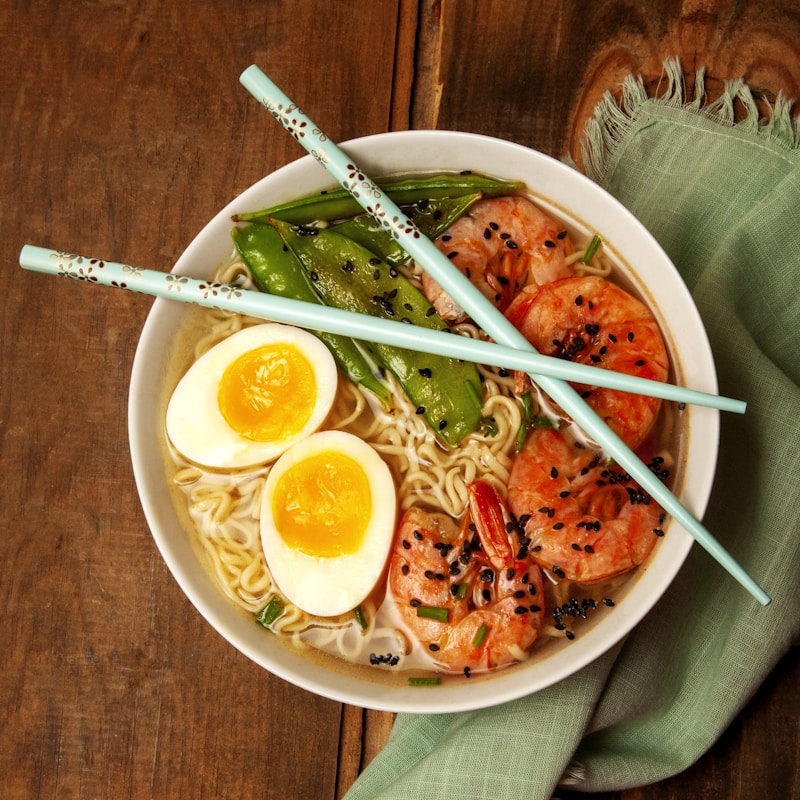
Why Tokyo is the World’s Ramen Capital
Japan has over 30,000 ramen restaurants, and Tokyo alone hosts thousands of them. Walk down any major street, and you’ll encounter the telltale scent of simmering broth — rich, savory, and utterly irresistible. But ramen is not just fast food in Japan; it’s a serious culinary art form.
Each bowl represents years of recipe refinement, from the 18-hour tonkotsu broth bubbled to milky perfection to the delicate dashi base of a shio (salt) ramen. Understanding the types before you visit will elevate your entire experience.
The 5 Essential Ramen Styles
1. Shoyu (Soy Sauce) Ramen — The Tokyo Classic
Shoyu ramen is Tokyo’s original style. The broth is clear to dark brown, built on chicken or dashi stock with a soy sauce tare that gives it a savory, slightly sweet depth. Toppings typically include chashu pork, menma (bamboo shoots), nori, and a soft-boiled egg.
Where to try it: Fuunji in Shinjuku serves a phenomenal tsukemen (dipping ramen) that started a Tokyo-wide trend.
2. Tonkotsu (Pork Bone) Ramen — The Rich Southern Import
Originally from Fukuoka, tonkotsu has taken Tokyo by storm. The broth is milky white from pork bones boiled for 12–18 hours until the collagen breaks down into a rich, creamy consistency. It’s rich, fatty, and deeply satisfying.
Pro tip: Add a “kaedama” (extra noodles) at the end — most tonkotsu shops offer this for ¥100–200.
3. Miso Ramen — Hokkaido’s Gift to the World
Miso ramen originated in Sapporo, Hokkaido in the 1960s. A fermented soybean paste base gives the broth a thick, hearty character perfect for cold winters. Modern Tokyo versions often feature corn, butter, and ground pork for extra richness.
4. Shio (Salt) Ramen — The Purist’s Choice
Shio ramen is the most delicate of all styles, with a light, clear golden broth built on chicken, seafood, or dashi with a salt-based tare. It requires immense skill to achieve depth without heaviness. Look for shops with long queues — they’re worth it.
5. Tsukemen (Dipping Ramen) — Tokyo’s Modern Innovation
Invented in Tokyo in the 1950s, tsukemen features thick noodles served cold alongside a concentrated, intensely flavored dipping broth. You dip and eat rather than slurp from a soup bowl. At the end, ask for “soup wari” — they’ll dilute the broth with hot dashi so you can drink it.
Top Ramen Neighborhoods in Tokyo
| District | Specialty | Vibe |
|---|---|---|
| Shinjuku | Variety — every style available | Busy, urban |
| Shibuya | Trendy new-style ramen | Young crowd |
| Ikebukuro | Rich tonkotsu and Jiro-style | Local favorite |
| Akihabara | Fast, affordable bowls | Tourist-friendly |
| Nakameguro | Artisan & boutique shops | Instagram-worthy |
Practical Tips for Ramen Dining in Japan
- Ticket machines — Most ramen shops use vending machines. Select your bowl and hand the ticket to the staff.
- Counter seating — Many shops have solo counter seating. Slurping is encouraged (it cools the noodles and shows appreciation).
- Customization — You can often adjust broth richness (濃さ), oil level (油), and noodle firmness (硬さ). Use Japanese: 普通 (futsuu = normal), 硬め (katame = firm), 柔らかめ (yawarakame = soft).
- Eat fast — Noodles absorb broth and get soggy. Ramen is meant to be eaten immediately.
- Queues are worth it — A 30-minute queue is standard for top shops. Bring it on.
Affiliate Picks: Ramen at Home
Want to recreate the experience at home? These products are the real deal:
- 🍜 Authentic Japanese Ramen Noodle Sets — Check on Amazon (affiliate link)
- 📖 “Ivan Ramen” Cookbook by Ivan Orkin — A NYC chef who conquered Tokyo’s ramen scene. View on Amazon (affiliate link)
- 🥢 Marutai Hakata Tonkotsu Ramen (Pack of 10) — Japan’s best-selling instant ramen. View on Amazon (affiliate link)
Note: These are affiliate links. We earn a small commission at no extra cost to you if you purchase through them. Thank you for supporting Japan Insider!
Final Thoughts
Tokyo’s ramen scene is endlessly deep. Even locals who’ve eaten ramen weekly for decades say there’s always a new shop to discover. Our advice: skip the tourist traps near major stations and follow the queues into backstreets. The best bowl you’ll ever have is likely in a 10-seat shop run by a lone master who’s been perfecting his recipe for 20 years.
Go hungry. Slurp loudly. Repeat.